Showing posts with label Chocolate. Show all posts

Sunday

Spicy Tea

I just had my very first taste of Chai Tea and I'm HOOKED! I will be experimenting with Chai Tea during the upcoming winter nights, for sure. I googled Chai Tea and found this interesting recipe of Chocolate Chai Tea:

Things You'll Need:

  • 3/4 cup boiling water
  • 1 Chai Tea Bag
  • 1 tablespoon unsweetened cocoa
  • 2 tablespoons sugar
  • 1/2 cup milk 

  1. BOIL WATER - POUR OVER TEA BAG
    Steep for 5 minutes. Squeeze excess out of the teabag.
  2. POUR TEA IN SAUCEPAN
    Add cocoa, sugar with tea mixture stir until disolved.
  3. STIR MILK INTO TEA MIXTURE
    Continue to stir until warm.
  4. POUR INTO A LARGE MUG and ENJOY!!!!

    Add cinnamon stick and whipped cream if desired.


    Saturday

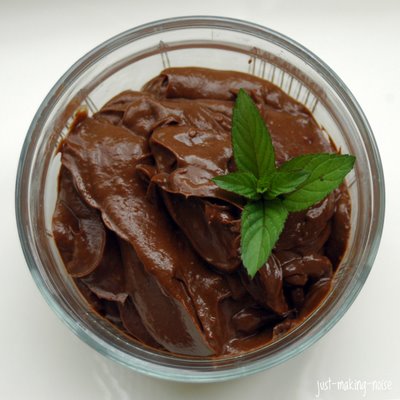
    Chocolate Avocado pudding......

    (UPDATE:  I just made this tonight - and WOW! is it ever good!  Rich and decadent tasting, but it's not - it's good for you.  This tastes like a really thick, luscious chocolate pudding.)


    What if I told you that I am about to share with you a sweet chocolate pudding that is raw, rich, wholesome, creamy, dairy-free, egg-free, wheat/gluten-free and made with avocados...

    Yep, avocados!


    Chocolate Avocado Pudding Recipe


    makes about  3 servings
    • 1 ripe banana
    • 1/4-1/3 cup honey - or sweetener (I used 1/2 cup +2 Tbsp. Splenda)
    • 1/2 tsp. vanilla
    • 2 avocados, mashed
    • 1/4 cup, plus 2 Tbsp. unsweetened cocoa powder
    • 1/4 cup liquid (either water or milk or coconut milk)

    Process banana, sweetener, vanilla in a food processor (or blender) till smooth. Add the avocados, cocoa powder and process till creamy. Scrape down the sides a few times with a rubber spatula. Add the liquid and process briefly. Store in a sealed container. It will keep for three days in the fridge or two weeks in the freezer. Serve chilled or at room temp. (tastes best chilled!).

    TO DOUBLE IT: Increase the amounts to 1 1/2 bananas, 1/2-3/4 cup raw honey, 1 tsp. vanilla, 4 avocados, 3/4 cup cocoa powder and 1/2 cup water.

    Now, one thing to remember:  Since you are using avocados and a banana, the fat/carb/calorie  count will be high.  But this is real food, folks.  And no, you wouldn't want to serve it every night.  But when you want something that is not filled with trans fats and empty calories, this is a good food.  And you also get good nutrients, unlike conventional pudding.  Here is the breakdown, using milk and Splenda:


    Nutrition Facts


    Amount Per Serving
      Calories 266.8
      Total Fat 19.2 g
          Saturated Fat 3.3 g
          Polyunsaturated Fat 2.2 g
          Monounsaturated Fat 11.7 g
      Cholesterol 1.0 mg
      Sodium 20.5 mg
      Potassium 886.7 mg
      Total Carbohydrate 35.3 g
          Dietary Fiber 11.2 g
          Sugars 17.6 g
      Protein 4.7 g

      Vitamin A 4.8 %
      Vitamin B-12 1.5 %
      Vitamin B-6 28.8 %
      Vitamin C 22.9 %
      Vitamin D 2.6 %
      Vitamin E 8.4 %
      Calcium 5.1 %
      Copper 25.7 %
      Folate 28.3 %
      Iron 10.2 %
      Magnesium 20.9 %
      Manganese 25.9 %
      Niacin 13.1 %
      Pantothenic Acid     18.8 %
      Phosphorus     14.2 %
      Riboflavin 15.5 %
      Selenium 3.7 %
      Thiamin 7.6 %
      Zinc 9.5 %

    Foods and Cancer...

    The odds a person will ever be diagnosed with cancer are 1 in 2.44, and the odds a person will die of it are 1 in 4.7. Although most of us think we eat pretty well—the odds an adult considers him- or herself a healthy eater are 1 in 1.56 (64%)—cancer remains the second most common cause of death in America, after heart disease.

    Complicating the food-cancer connection is the fact that cancer is a whole constellation of diseases, each with its own risk factors; at the same time, the definition of “eating right” seems to change every time we look at the health news. “Healthy eating” now includes, in addition to the old standbys like fruits and vegetables, some items we used to think of as mere indulgences.

    HEROES AND POTENTIAL HEROES

    Fruits and vegetables: the American Cancer Society sums it up this way: Vegetables and fruits, particularly if they have lot of color, are loaded with antioxidants, vitamins, minerals, etc., that collectively reduce the risk of cancer, including lung cancer and cancers of the digestive tract (from mouth to colon). However, some recent research has failed to find major reductions in cancer risk associated with eating the recommended five servings a day. One study that followed nearly half a million people found only a “very small inverse association.” Researchers have suggested that studies of specific plant foods might be more fruitful. For example:

    Citrus. Consuming citrus fruits was associated with lower cancer rates in an analysis of 48 international studies. Oranges, the researchers said, have very high antioxidant levels, with flavonoids that have been shown to have anti-inflammatory and anti-tumor properties.

    Garlic. Some studies have indicated consuming garlic helps protect against various cancers. An analysis in the Journal of Nutrition of seven population studies, for example, showed that garlic consumption reduced the risk of colorectal and stomach cancers. (The odds a person will ever be diagnosed with colorectal cancer are 1 in 18.45.)

    Tomatoes and Broccoli. Evidence that the lycopene found in tomatoes prevents prostate cancer is inconclusive. One study found that eating tomatoes in combination with broccoli shrank prostate tumors in rats by 52%. Evidence that broccoli and other cruciferous vegetables have particular cancer-prevention effects remains merely suggestive, but one compound found in broccoli, cabbage, and Brussels sprouts shows promise in stopping the growth of prostate and breast cancer cells.

    Red Wine. Drinking moderate amounts of red wine has been shown to lower prostate cancer risk. It contains resveratrol (an antioxidant) and flavonoids (polyphenols also found in chocolate), which appear to be healthful agents. (The odds a male will ever be diagnosed with prostate cancer are 1 in 6.29, and the odds he’ll die of it are 1 in 35.71.) Another study showed a 60% drop in lung cancer risk among male smokers who had one or two glasses of red wine per day. ( Lung cancer kills 1 in 16.75 Americans, more than any other type of cancer.) On the other hand, drinking alcoholic beverages of any kind has been linked with a higher risk of breast cancer in women.

    Chocolate. The antioxidants in chocolate may help prevent cancer by fighting cell damage that leads to tumors.

    VILLAINS AND POTENTIAL VILLAINS

    Some foods may carry increased cancer risk. A new Korean study found a small increase in stomach cancer associated with a saltier diet. (In the US, the odds a person will ever be diagnosed with stomach cancer are 1 in 111.1.) A new study on rats suggests eating a fatty diet during pregnancy carries breast cancer risk for the children—and even grandchildren. A byproduct of cooking (especially burning) carbohydrate-rich foods has been tied to increased cancer risk in postmenopausal women. And soy contains phytoestrogens that may be linked to breast cancer, again in postmenopausal women.

    FOOD VS. INGREDIENTS

    So there’s no yes or no answer to the question of whether “eating right” prevents cancer. Clearly, some ingredients in some foods are linked to higher or lower risks for some cancers and other health problems. Maybe the best practice of all is just to follow food author Michael Pollan’s advice: If your grandmother wouldn’t recognize it, or you can’t pronounce the ingredients, don’t eat it.

    Friday

    Dark Chocolate

    Cocoa is loaded with compounds called flavonoids, which are also found in cranberries, apples, strawberries, onions, tea, and red wine, placing chocolate in excellent company. The particular class of flavonoids found in cocoa are called flavanols, and the flavanols in cocoa prevent fatlike substances in the bloodstream form clogging the arteries. When you reduce the blood’s ability to clot, you also reduce the risk of heart attack and stroke. An extra bonus, cocoa also contains magnesium, one of the most important minerals for heart health. Flavanols also modulate a compound in the body called nitric oxide, which is crucial for healthy blood flow and healthy blood pressure and is a very important compound in the area of cardiovascular health. But here’s the thing: This endorsement of chocolate comes with a very big qualification. We’re not talking about commercial chocolate bars or those chewy caramel-marshmallow-nut-covered candy bars. The health benefits are found in real cocoa – in fact, that’s the stuff than makes cocoa kind of bitter. You’ll see the best of these bars with labels that say things like “60 percent cocoa” (70 percent or higher is even better, but much harder to find). Milk and white chocolate have virtually none of these health benefits. Note: Health benefits aside, chocolate is not for everyone. It seems to trigger addictive eating behavior in some people.

    Jonny Bowden, PhD, CNS, author of The 150 Heal